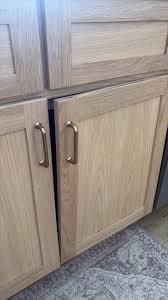
The Physics of Warping: Why Wood Fails in High-Moisture Environments
Warped cabinet doors and swollen panels are common in tropical climates. This is not just a workmanship issue. It is physics. Wood reacts to moisture in the air, expanding and shrinking over time. Understanding why this happens helps homeowners and developers choose materials designed for long-term stability.
August 23, 2026 // Author: Resitque Team
When Cabinets Change Shape
Most people notice cabinet problems slowly. A door stops closing properly. A panel looks slightly uneven. A shelf begins to sag.
These changes often come from warping. Warping happens when materials change shape because of uneven internal stress. In homes with high humidity, this stress usually comes from moisture.
Understanding how warping works helps explain why some cabinet materials perform poorly in tropical climates.
How Wood Reacts to Moisture
Wood is a natural material made from long cellular fibres. These fibres absorb moisture from the surrounding air. Scientists describe this property as hygroscopic behaviour, meaning the material exchanges moisture with its environment.[1]
When humidity rises:
Wood fibres absorb water
The material expands
Internal pressure increases
When humidity falls:
Moisture leaves the fibres
The material contracts
This expansion and contraction cycle causes movement inside the board. Over time, this movement leads to distortion.
Why Warping Happens
Wood does not expand evenly. Different parts of the grain absorb moisture at different rates. Because of this, the material bends instead of expanding uniformly.
Common forms of warping include:
Bowing – the board curves along its length
Cupping – edges rise or fall relative to the centre
Twisting – opposite corners move in different directions
Once this deformation begins, it rarely corrects itself. The structure of the board has already changed.
Engineered Boards Still Move
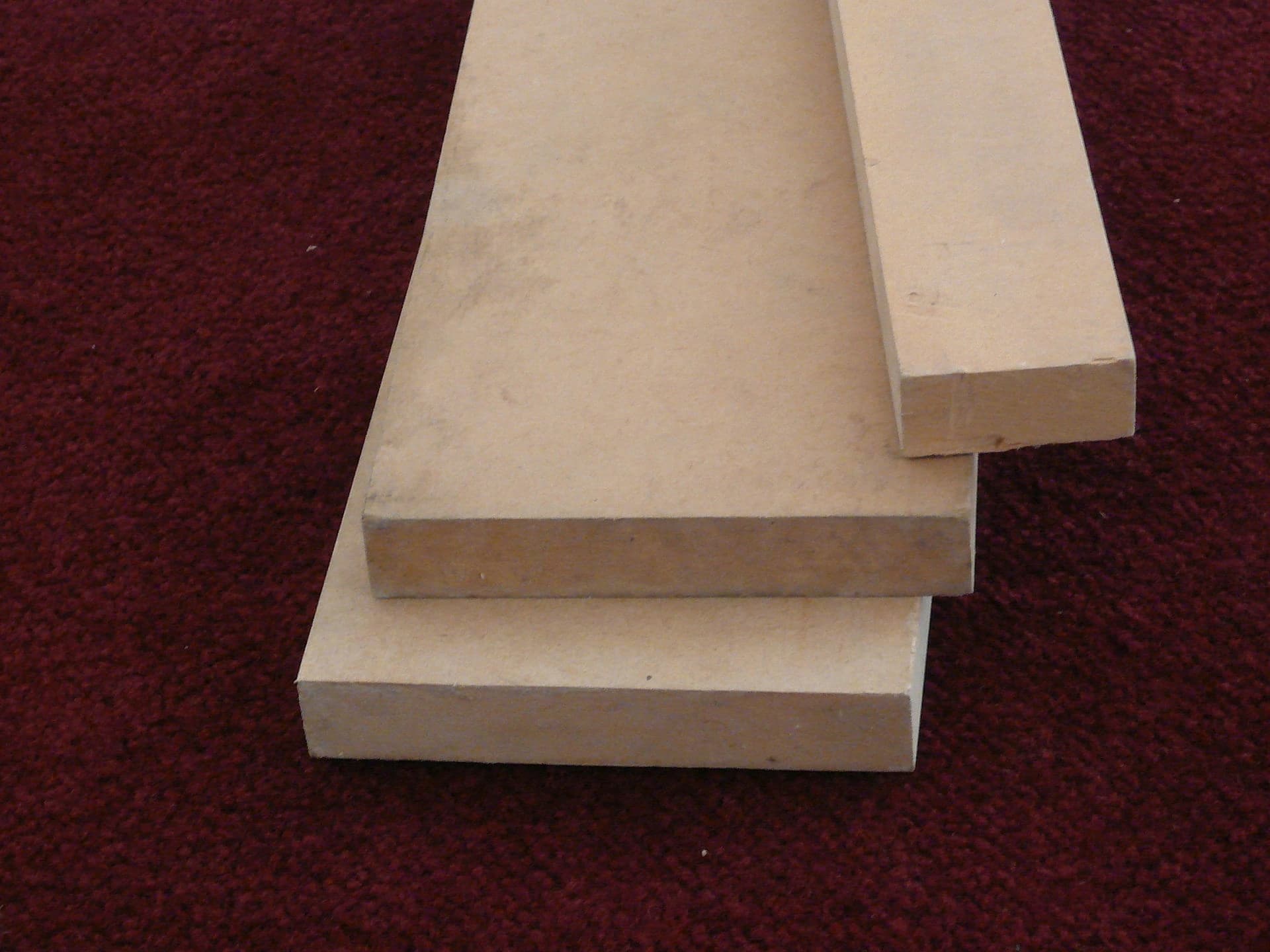
Many modern cabinets are made from engineered boards such as MDF or particle board. These materials are made by compressing wood fibres with adhesives. They appear smoother and more uniform than natural wood. But they still contain wood fibres. That means they still absorb moisture and change size when humidity changes.[2]
In humid environments, swelling can occur along edges and joints. The board weakens from inside. This is one reason cabinet doors sometimes become misaligned after a few years.
Humidity in Tropical Homes
In climates like Singapore, humidity levels remain high most of the year. Average relative humidity often stays above 80 percent.[3] Because the air rarely becomes completely dry, wood materials do not fully stabilise. Instead, they experience continuous moisture movement. This constant cycle accelerates warping.
Cabinet systems installed in kitchens, service yards, or near sinks face even greater exposure to moisture.
The Problem of Internal Stress
Warping often begins inside the material before it becomes visible. When moisture enters a board unevenly, one layer expands more than another. This difference creates internal tension. Over time the board bends in response to that stress.
In cabinet doors, the problem becomes obvious because the door must remain flat to align with hinges.
Even a small distortion can cause:
Gaps between panels
Difficulty closing doors
Uneven cabinet lines
For homeowners, this usually means repairs or replacement.
Why Aluminium Behaves Differently
Aluminium reacts very differently to humidity. Unlike wood, aluminium does not absorb water from the air. This means it does not swell or shrink when humidity changes.
The material remains dimensionally stable. Because of this stability, aluminium structures maintain their shape even in environments where humidity remains high for long periods.
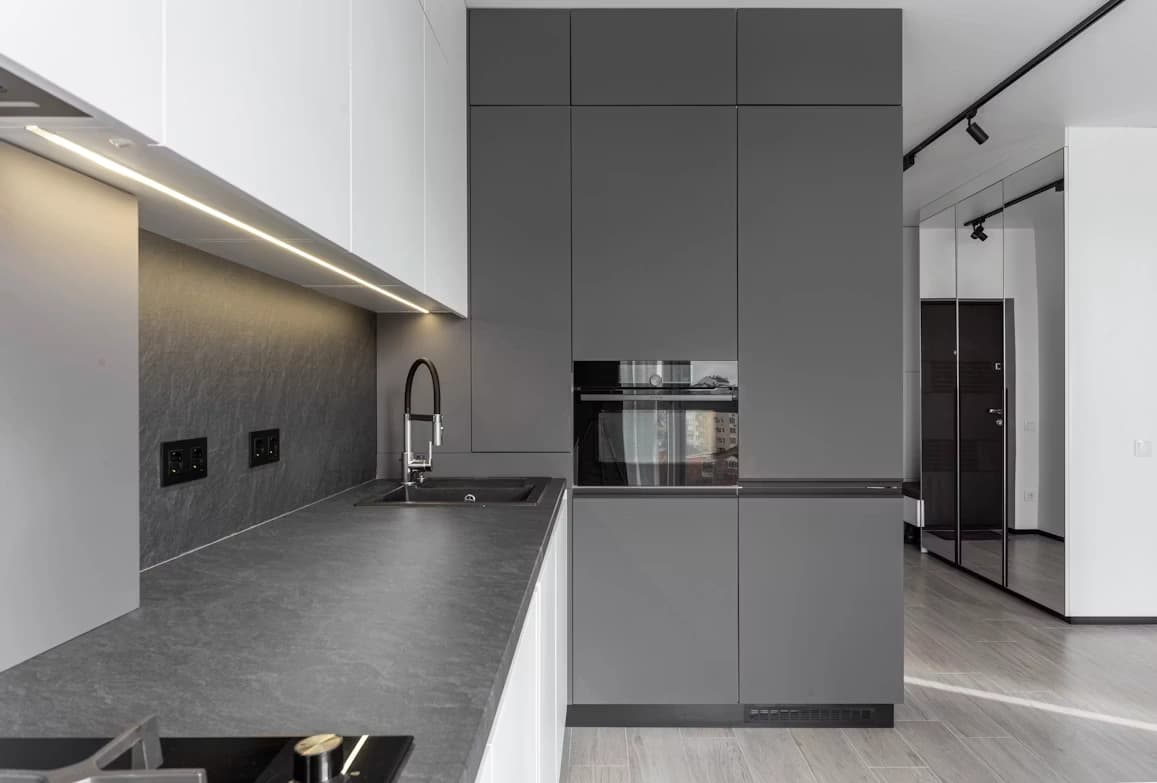
This is one reason more homeowners are exploring aluminium kitchen cabinets when renovating kitchens in tropical climates. At Resitque, cabinet structures are built using aluminium frames and panels designed to remain stable despite constant humidity changes.
You can learn more about these aluminium kitchen cabinets and kitchen units designed for durability in humid environments.
Why Stability Matters in Cabinets
Cabinets are functional systems. Doors must align correctly. Shelves must remain level. Hardware must remain secure. When materials warp, these systems fail.
Warping can cause:
Hinge misalignment
Uneven doors
Structural weakness
Long-term maintenance issues
For developers and contractors, this means warranty claims and maintenance work. For homeowners, it means renovation sooner than expected. Choosing materials that resist humidity helps prevent these problems.
The Cost of Repeated Movement
Every time a material expands and contracts, it experiences internal stress. Over many years, this stress accumulates.
Eventually:
Screws loosen
Joints weaken
Panels deform
Even if the cabinet exterior looks acceptable, the internal structure may already be compromised. This is why lifecycle durability matters when selecting cabinet materials.
Climate-Responsive Design
Building materials are often developed for temperate climates. But tropical environments place different demands on interior systems. In regions with constant humidity, materials must resist moisture movement.
Cabinet systems designed with aluminium structures reduce the risk of swelling and warping because they do not rely on wood fibres. This approach focuses on performance rather than tradition.
A Long-Term Perspective
When homeowners renovate kitchens, cabinets are expected to last many years. However, materials that warp easily may shorten that lifespan. Warping rarely happens suddenly.
It develops slowly as humidity interacts with the material. Understanding the physics behind this process helps homeowners make better decisions. Cabinet materials that remain stable in humid environments reduce the need for future repairs.
In climates like Singapore’s, choosing materials that resist moisture movement can make a noticeable difference over time.
References
[1] Encyclopaedia Britannica – Wood: Physical Properties
https://www.britannica.com/science/wood-plant-tissue/Physical-properties
[2] The Wood Database – Wood and Moisture
https://www.wood-database.com/wood-and-moisture/
[3] Meteorological Service Singapore – Climate of Singapore
https://www.weather.gov.sg/climate-climate-of-singapore/
READ MORE OF OUR POSTS